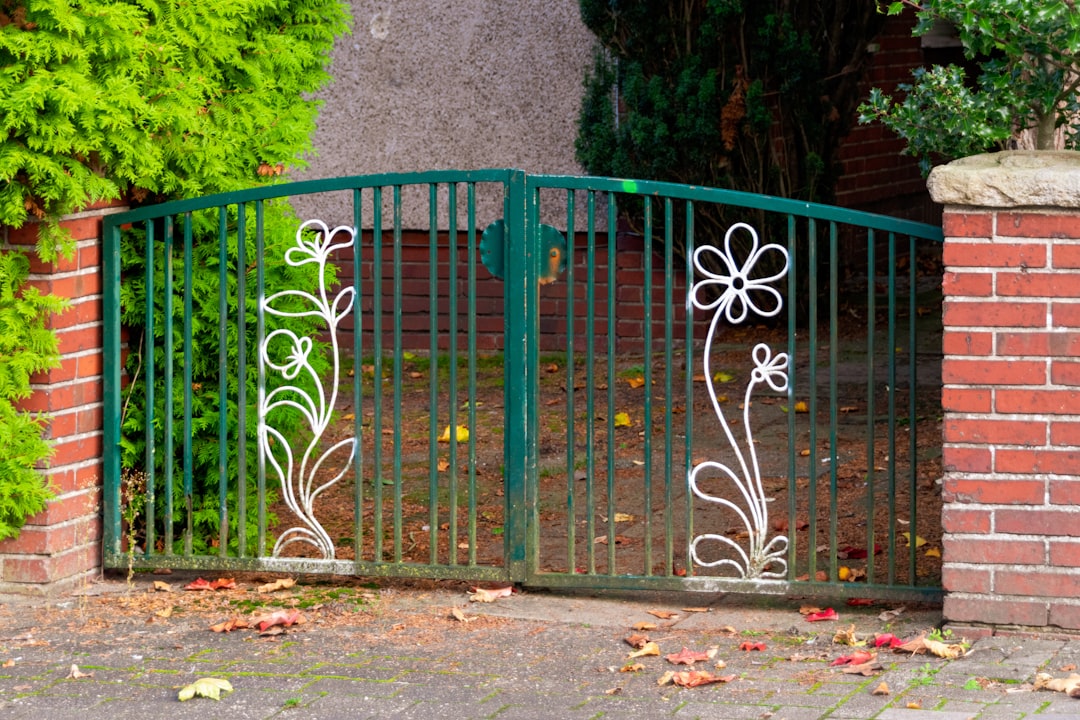
Metal Gate Installation in Mount Pleasant, SC

Custom Metal Gates for Mount Pleasant Homes

Driveway gates, wrought iron, and motorized entry systems built and installed across Mount Pleasant and the surrounding towns and islands. Free on-site estimates.
Free on-site estimatesWelded on siteServing Awendaw to Charleston

Around Town

Local gate projects and coverage notes from the neighborhoods we work in every week.

Black and white image of a decorative iron gate and stone post under bright sunlight, showcasing in Mount Pleasant, SC

Metal Gate Repair Shops and the Security Door: Why the Frame Is the Whole Job

Pull the handle of a hinged screen door and watch the corner of the frame instead of the latch. On most of them the corner moves. That small flex answers a question people usually ask in product terms at the showroom, which is whether they are buying weather protection or a barrier, because the two hang side by side looking almost identical and behave nothing alike the moment a shoulder goes into one.

A storm door exists to manage air, rain and insects. Its frame is a thin wall aluminum extrusion with screwed or crimped corners, its latch throws a short bolt into a keeper riveted to the strike jamb, and the whole thing is attached with short screws into the brickmould. None of that is a defect. It is correctly built for what it does. A barrier door is a different animal: heavier extrusion or steel, corners welded rather than fastened, a full height hinge, mesh captured in a channel with a retaining strip, a deadbolt with a real throw, and a perimeter fixed to the structure of the wall rather than to the trim nailed onto it.

That difference in purpose is why a metal fabrication shop is a more natural supplier than a hardware aisle. The problems a security door presents are the same problems a driveway gate presents, and a shop that lists frames, latch work, hinge rebuilds and coatings as separate services is already solving the geometry: a steel frame hung in an opening that moves with the seasons, a latch that has to meet its strike while the leaf is loaded, hinges carrying weight on a lever arm, and a closer fighting wind. Fabricators who hang gates all week tend to measure the opening before they quote. Suppliers who sell boxed doors tend to quote first and discover the opening on installation day.

The frame carries everything, and the wall decides the frame

The door itself is rarely the weak member. Published test failures and real forced entries almost always show the same thing, which is the attachment giving up before the leaf does. A welded frame with a one inch deadbolt is worth very little if the eight screws holding it in place are biting into nothing but trim and mortar.

So the useful question before any hardware comparison is what the fasteners will actually reach, and the answer differs by wall type.

Brick veneer, and the hollow inch behind it

A brick front is usually a single wythe standing off the sheathing with an air gap behind it, tied back with corrugated straps. A screw or a sleeve anchor set into that veneer grips a decorative shell, not structure. It will hold a storm door for years and it will pop bricks out of the wall if a barrier door is pulled on hard.

There are two honest ways through it. Anchor into solid brick rather than the mortar joint face, accepting that the holding power is limited by the veneer itself and treating the installation as moderate rather than high resistance. Or run longer fasteners through the veneer and the gap into the framing behind, with a solid shim column at every fastener so tightening the screw does not draw the frame into the cavity and bow it. The second takes longer, needs the framing located accurately, and is the only version that makes the door as strong as the hardware printed on the label.

Wood jambs, and why screw length is the spec

On a wood jamb the fastener has to pass through the jamb and into the trimmer stud behind it. Three inch screws are a floor, not a premium option, and every one of them wants solid blocking or a shim stack behind the jamb at that point. Jambs are usually set with a gap for adjustment, and a long screw tightened into open air pulls the jamb inward and takes the door out of square with it.

Humid coastal framing adds one check. Probe the bottom six inches of both jambs with an awl before anything is ordered. A soft jamb bottom carries no fastener at all, and it is the most common reason a correctly specified door comes loose at the strike side within a year.

Aluminum sub frames and stucco returns

Some openings have no wood anywhere near the perimeter: an aluminum or vinyl frame, or a stucco return running straight to the window buck. Fasteners spin in those, and nothing about the finished look tells you so. The fix is a wood sub frame screwed to located framing first, then the door mounted to the sub frame. It costs a little trim work and it is the difference between a door and an ornament.

Mesh: what you see out of, and what resists a pry bar

Infill is where the real range in these doors lives, and the trade off is honest rather than marketing.

Ordinary insect screen offers no resistance whatsoever, which is fine on a storm door. Perforated aluminum sheet looks solid, gives good one way visibility, and will deform under a firm pull. Expanded metal is genuinely strong and genuinely ugly from both sides, and it blocks a noticeable amount of light. Woven stainless mesh is the interesting one: fine wires in a marine grade alloy, strong enough that it resists cutting with hand tools, open enough that it reads almost like a screen from inside. A welded grille or bars is the strongest option available and the hardest to live with, because a grille that cannot be opened from inside is also a blocked escape route.

Two practical notes that nobody mentions. Dark mesh reads far more transparent than light mesh, because the eye looks past a dark surface and glares off a pale one, so black or dark bronze is the choice when the view matters. And any fine mesh in salt air wants a thorough rinse on the same schedule as the windows, since the same wires that keep tools out hold salt against the frame indefinitely.

The strike is where force arrives

Latch hardware gets discussed as a brand and should be discussed as a load path. A kick or a pry concentrates everything into a patch of material around the bolt, and whichever of four things is weakest is what breaks.

The throw matters first. A short bolt dropping into a sheet metal keeper has almost no engagement, and the keeper tears before the bolt bends. A full one inch throw into a formed strike box is a different proposition. Then the strike box fasteners: two long screws reaching the framing behind the jamb, not short screws into the stop. Then the door's own latch stile, which on a well built door carries an internal reinforcement block at the bolt rather than relying on the extrusion wall. Then the cylinder, which is the part everyone focuses on and the part that fails last.

One safety rule overrides all of it. A cylinder keyed on both sides looks more secure and turns the door into a trap, because getting out in smoke means finding a key. Keyed outside, thumb turn inside, every time, on any door in an escape path.

Closers, hold opens and a door standing open in a gust

A pneumatic closer is sized to leaf weight and width, and a heavy barrier door generally wants two of them, one high and one low, rather than one working beyond its range. A single undersized closer on a heavy leaf is why the door slams in the morning and will not latch in the afternoon.

Wind is the failure mode that actually destroys these doors around Mount Pleasant, where a squall line off the harbour can turn a calm porch into a wind tunnel in a few minutes. The sequence is always the same. Somebody engages the hold open washer to carry groceries, a gust takes the leaf past the closer's travel, and the closer bracket tears out of the frame or the hinge takes a permanent bend. A limiting chain across the top of the opening stops it for the price of a bracket. Through storm season the simpler habit is to leave the hold open disengaged entirely and let the closer do its one job.

Deep porches and raised entries help a great deal here, which is part of why older houses in the Old Village lose fewer doors than newer ones on exposed corner lots with shallow stoops.

One key plan for the gate and the door

Where a property has both a driveway gate and a hardened entry, the two are usually bought from different people at different times, and the household ends up carrying two keys and a code for an entrance that should be one decision.

It is worth deciding once. Cylinder formats differ between a pedestrian gate lock and a door lock, but both can commonly be fitted with cylinders in one keyway and keyed alike, and asking for that at order time costs almost nothing while retrofitting it later means a locksmith visit. If the gate runs on a keypad or a card, the sensible arrangement is one credential type for people who come daily and a mechanical override on both the gate and the door for the people who come once. Write down who holds what, and treat a lockbox at the street as part of the plan rather than an afterthought, because a gate nobody can open and a door nobody can open is the combination that turns a small emergency into a forced entry by somebody you called for help.

Salt air decides the hardware, not the finish

Powder coat over properly pretreated aluminum holds up well in this climate. The parts that do not are the small steel ones: hinge pins, closer pistons, strike screws, mesh retaining clips.

Two details earn their keep across the Lowcountry. Match the metals or isolate them, because a plain steel fastener in an aluminum frame streaks within a season and a stainless one against bare aluminum sets up galvanic corrosion of its own without a nylon or neoprene isolating washer. And put the hinge pins and the closer rod on the same rinse and lubricate schedule as everything else outdoors. Houses from the brick ranches around Snee Farm to the fibre cement elevations further out in Park West all sit in the same salt laden, humid air for most of the year, and it finds the smallest component first.

An opening is a system

A hardened door is four things that have to agree: a leaf stiff enough not to deflect, an attachment that reaches structure, a strike that will not tear out, and a closer that survives wind. Specify three of those well and the fourth decides the outcome.

Which is why the measurements worth taking happen before any product is chosen. Wall type at the perimeter and what lies behind it. Jamb condition at the bottom. Opening width, height and whether it is square. Leaf swing and what it will meet when wind takes it. Those four facts turn two quotes into a comparison instead of two numbers.

An iron gate featuring a sun design, set in a tranquil courtyard on a sunny day in Mount Pleasant, SC

Metal Gate Repair for the Walk Gate Nobody Specified

Almost every property that has a metal driveway entrance also has a second, much smaller gate somewhere along the fence line, and almost nobody thinks about it until the day it stops latching. It is the one beside the garage, or at the end of the brick walkway, or tucked between a hedge and a courtyard wall. It gets called the side gate, the garden gate or the walk gate, and on most quotes it appears as a single line underneath the real work.

That line item is where a disproportionate share of later service calls come from. The driveway leaf might cycle a few times a day with an operator doing the lifting. The walk gate gets shoved open with a forearm while somebody carries groceries, pulled shut by a dog walker who is not looking, kicked at the bottom rail by a kid in a hurry, and leaned on by a delivery driver reading a phone. Same metal, same finish, completely different life.

Owners pricing repairs around Mount Pleasant run into this constantly, because the older neighbourhoods near the harbour pair tall driveway gates with narrow pedestrian openings in brick garden walls. A shop that builds wide driveway leaves all week is not automatically the right iron works for a pedestrian gate, because the two problems barely overlap. One is a span and wind problem. The other is a hardware and human contact problem.

The thing swinging is closer to a door than a gate

A useful mental shift is to stop treating the walk gate as a scaled down driveway gate and start treating it as an exterior door that happens to be made of pickets.

Doors are specified around cycles, hand contact, latching reliability and the force a person applies without thinking. That is exactly the walk gate's world. A residential pedestrian gate on a busy side yard can easily see more open and close cycles in a month than the driveway gate sees in a year, and every one of those cycles ends in a latch engaging or failing to engage while somebody has their hands full.

Nothing in a driveway gate's design brief prepares the hardware for that. A driveway leaf is usually stopped by an operator, a drop rod or a cane bolt, with a latch that is either decorative or rarely touched. The walk gate's latch is a mechanism in continuous use, and mechanisms in continuous use need throw, tolerance and a strike that stays where it was set.

A narrow leaf hides its loads instead of removing them

The intuition that a small gate is a light gate is only half true. The leaf weighs less, so the steady load on the hinges is lower. What rises sharply is shock loading.

A short leaf gives a person tremendous leverage at the latch edge relative to the hinge. Push the far edge of a wide driveway leaf and the force spreads across a long arm and a heavy frame. Push the edge of a narrow pedestrian leaf and most of that energy lands straight into two hinge points and the top rail weld. Add a self closing spring that slams the gate if nothing damps it, and the assembly is absorbing a hard impact several times a day at exactly the joint that is hardest to repair later.

That is why cracked welds at the top hinge, egged out hinge pin holes and a latch bar that no longer lines up are far more common on side gates than on the entrance they match. The failures look like poor workmanship. Most of the time they are a loading problem nobody accounted for.

Three design choices take the sting out of it. Use three hinges rather than two on anything taller than waist height, so no single point takes the whole shock. Put a gusset or a continuous corner weld at the top hinge corner rather than a simple butt joint. And choose a closer that controls the last part of the swing instead of a bare spring that accelerates the leaf into the strike.

Hardware for pedestrian gates is its own catalogue

The single most common mistake is fitting whatever hardware was in the van. Pedestrian gate hardware is a separate family from both door hardware and driveway gate hardware, and the parts are not interchangeable in either direction.

Interior door hinges have no business outdoors on a gate, no matter how heavy they look. Gate hinges are made to carry load in shear and to tolerate a post that is slightly out of plumb. Many are adjustable after installation, which matters enormously on a gate whose post is set in soft ground.

Latches divide roughly into thumb latches, gravity latches and lockable deadlatches, and the choice is driven by which side the gate is operated from, whether it must lock, and how much movement the leaf has across seasons. A gravity latch with a generous slot in the strike will keep catching when the leaf has shifted. A tight plate with a small keeper will not, and gets blamed for a problem that belongs to the strike rather than the latch.

Self closing hinges are a category of their own, with adjustable tension and a tendency to lose that tension quietly over a few years. A gate that used to swing shut by itself and now rests an inch from the strike is usually telling you the spring has relaxed, not that the post moved.

Where metal gate repair on a walk gate gets expensive

The expensive version is always the one where somebody kept adjusting around a worn part. A hinge that has developed play lets the leaf drop, the latch stops meeting the strike, the strike gets moved down, the leaf drops further, the strike gets moved again, and eventually there are three sets of holes in the post and no good metal left to anchor into. Replacing a worn hinge early costs a fraction of rebuilding the post face later.

The post decides more than the gate does

On a driveway entrance, posts are a serious engineering item: deep footings, big sections, sometimes masonry piers with steel cores. On a pedestrian gate, the same attention rarely shows up, and that is where the local ground conditions bite.

Much of the Lowcountry sits on sand over clay with a high water table, and in the older parts of Mount Pleasant a side gate often hangs off a brick garden wall or a pier that was built for appearance rather than for a swinging load. Brick is excellent in compression and poor at resisting something repeatedly trying to pull a bolt sideways out of a mortar joint.

The practical consequences are easy to state. Anchor into the brick units themselves where possible, not into mortar joints, and use anchors rated for the shear load rather than whatever sleeve was handy. On a freestanding steel post, oversize the section relative to the gate weight, because stiffness rather than strength is what keeps a latch aligned. Bury deeper than looks necessary and bell the bottom of the hole if the ground is sandy. And if the post is already moving, fix the post before touching the gate, because every adjustment made to a gate on a moving post is temporary by definition.

The failures that only happen at ankle height

Walk gates fail from the bottom up far more often than driveway gates, because of where they sit. A side yard gate lives in a corridor that collects irrigation spray, mulch piled against the bottom rail, leaf litter and run off from a roof valley with no gutter above it.

Coating failure starts at the bottom rail and the lowest few inches of picket, where water sits and mulch holds moisture against the metal. On a hollow section that has no drainage, the inside is the half that rusts first, and the outside looks acceptable right up until the rail flexes under a thumb.

Two habits add years. Keep a visible air gap under the gate and keep mulch and planting pulled back from the rail and the posts. Point irrigation heads away from the gate line, because a head that sprays the same two feet of metal twice a day is a corrosion machine running on a timer.

What to look at before anyone quotes

A short inspection makes the conversation specific. Lift the latch edge of the leaf with one hand. If it rises noticeably, the hinges have wear. Close the gate slowly and watch whether the latch bar lands on the strike or above it. Look at the hinge fasteners for rust bleeding out of the holes, which signals the fastener is corroding inside the post. Check the bottom rail with a thumb for softness and tap it for the dull sound of a section that has filled with water. Finally, stand back and look at whether the gate is square or has pulled into a parallelogram, which is a frame problem rather than a hardware problem.

Describe what you find in terms of symptoms and timing. A gate that will not latch only in hot weather, a gate that will not latch at all, and a gate that latches but sags when pushed are three different jobs with three different prices, and the person quoting cannot tell which it is from a photograph.

The side gate is the part of the fence line that human hands touch every day. Specifying and repairing it like a small driveway gate is the reason it is the first thing to break and the last thing anyone budgets for.

A locked chain link gate in an urban alleyway in Mount Pleasant, SC

Rust Repair on Metal Gates: Surface Bloom, Section Loss and When to Cut Steel Out

A rust call on a driveway gate almost always arrives as a paint question. The gate has orange streaks running from the bottom rail, the black has gone chalky, and the owner wants a price for a cleanup and recoat. That is the wrong question, because paint is the last and least consequential decision in a rust repair. The first is how much steel is left, and on a coastal gate that answer is rarely what the surface suggests.

Rust does not eat a gate evenly, and here it does not work from the outside in. It works from wherever water gets in and cannot get out, and on a welded steel leaf there are four such places. The underside of the bottom rail, where grit and clippings hold a damp poultice against the coating long after rain stops. The punched sockets where pickets pass through that rail, each a small cup with a picket standing in it. The toes of every weld, where spatter and heat scale left the coating thin. And the inside of the hollow tube, which breathes humid salt air at night and keeps what the moisture brought with it.

Because the damage runs inside out, visible bloom is a late symptom rather than the problem itself. That is why metal gate repair crews in mount pleasant open a rust call with a hammer, a scraper and a caliper rather than a wire brush, and why a quote written from a walk past the gate is a guess. A leaf that looks alarming is often sound under a failed topcoat, and a leaf that looks merely tired can have a bottom rail with no measurable wall left in it.

Surface rust and section loss are two different jobs

The distinction that governs everything downstream is whether the steel has lost thickness or only lost its finish.

Surface rust is a film. It comes off with a wire wheel and leaves sound, faintly pitted grey metal behind, and the wall still measures what the fabricator bought. It is a finishing problem.

Section loss is not. Steel converting to iron oxide swells to several times its original volume, so the first sign is not a hole but a bulge: a rail that has grown, a seam opening along a weld, paint lifting in a blister that feels spongy. Scrape it and the flakes keep coming, and every layer is wall thickness already gone.

Two field checks separate them. Tap along the member with a hammer handle, because sound tube rings and scaled tube answers dull and flat. Then probe that band hard with an awl, since sound steel stops the tip while compromised steel dents or lets it through, and that is the real boundary of the repair whatever the paint above it looks like.

After that, measure, because a repair decision needs a number. Grind a patch to bright metal and put a caliper on a cut edge, or use an ultrasonic thickness gauge. Ornamental gate frames here generally run between a sixteenth and an eighth of an inch in the wall, and whether a tenth of that is gone or half of it decides everything. Run a magnet along the rail too, since filler over old rust is common and sands beautifully.

The loss matters differently depending on the member

A gate leaf is not a panel. It is a frame carrying its own weight out from two hinges, holding its shape because the members and the welds between them resist being pushed into a parallelogram.

That makes the perimeter frame, particularly the bottom rail and the hinge stile, structural. Loss there shows up as behaviour rather than appearance: the leaf racks and the latch stile drops relative to the strike. Measure corner to corner both ways, since on a square leaf those numbers agree, and half an inch of difference across a twelve foot leaf is a frame that has already moved.

Infill is judged more leniently. A picket carries almost nothing, so one that has lost a third of its wall is cosmetically poor and structurally irrelevant, until it works loose and starts enlarging its socket on every swing. The sockets are where the two questions meet: six rotted ones in a bottom rail is not six small repairs, it is a rail reduced to a strip of steel with a row of enlarged holes through it.

Cutting out and welding in new steel

Section loss gets removed and replaced. No coating, converter or encapsulating product restores thickness, and anything applied over active scale is a lid on a pot that keeps cooking.

Brace before cutting. The frame is what holds the leaf square, so the moment a length of bottom rail comes out the geometry is held by nothing. Take the diagonals first so there is a target to return to, then tack a temporary diagonal across the leaf. Skipping it is how a sound repair ends with a gate that no longer meets its partner.

Cut back past the damage rather than to it. The visible edge of the rot is not the edge of the thin steel, so the cut goes an inch or more into metal that rings and measures. A bead run against a rust thinned edge looks fine and has almost nothing to fuse into.

Match the replacement. Older gates do not always agree with current stock, and being an eighth out shows as a step along the rail the first time low sun hits it. Wall thickness should equal or exceed the original, because lighter puts the next failure exactly where the repair is.

How the joint is made depends on access. A splice mid run is usually built over an internal sleeve, a short length of smaller tube slid inside both ends so the weld has backing and the pieces cannot wander out of line. Where the member runs corner to corner, replacing it whole puts the new welds at the original joints instead of adding two seams mid span.

Thin, pitted tube welds badly at ordinary settings, since heat runs away into the pitting and blows through. Lower current, stitches rather than a continuous bead, and working around the joint keeps burn through and distortion in hand. Old coating and galvanising burn off in the arc, so grind to bright metal first. Then dress the welds flush and knock the spatter down, which on a gate is not cosmetic: weld toes and spatter peaks are where the next coating sits thinnest.

When the honest answer is a new leaf

Repair stops making sense at a point that is easy to recognise once someone names it.

When the rot is not local. A bottom rail is a repair. A bottom rail plus both stiles plus a dozen sockets is a new leaf with the old one paying for the labour to dismantle it. When the frame has racked and stayed racked, because pulling it square after the steel has yielded rarely holds. And when the pitting is general, since a surface with unreliable remaining thickness only gets thinner when it is blasted back to something coatable.

A new leaf is not a new installation, which is the part worth hearing. Posts, footings, hinges, the operator and usually the pattern carry over, and a fabricator can match the surviving leaf closely enough that the pair reads as original. That flips only where the design uses cast collars or scrolls nobody makes now.

Drain holes are part of the repair, not an upgrade

Any member being opened is a chance to fix the reason it failed.

A hollow section in this climate needs to drain, which means a hole at the genuine low point of each closed member, big enough that it cannot bridge over with paint or pack solid with dirt. Plenty of driveway gates are raked to follow a slope, so that low point is a corner rather than the middle of a rail.

The sockets need a deliberate decision. Either they are seal welded all round so nothing enters the rail past the picket, or they are left with a clear path through to a drain below. What fails is the common middle state, half closed by weld and half by paint, holding water against both parts. Open tube ends want caps that shed water rather than plugs that trap it.

Refinishing on site, or taking the leaf to a shop

Once the steel work is done there are two genuinely different paths, and the trade matters.

On site keeps the gate hung and the driveway usable, which decides it for many properties. The work is mechanical removal with wire wheels, flap discs and needle scalers, or a small vacuum shrouded spot blaster, then a brushed or sprayed system. Site preparation realistically reaches a clean, adherent surface rather than a blasted one, so the coating has to tolerate that: zinc rich primer on bare steel, cold galvanising compound over the repair welds, then an epoxy and urethane build. Brushing beats spraying around ornament and into pitting because it works coating in instead of bridging it. The frame interior cannot be treated, older coatings may carry lead so debris has to be contained, and the schedule is hostage to humidity and dew point.

A shop buys preparation site work cannot reach. The leaf comes off its hinges, so the operator is disconnected and hardware freed or cut, it travels supported flat so it cannot flex, and every reachable surface is blasted to bright metal before recoating. What that costs is days with an open driveway and whatever temporary security it needs, plus a real chance of extra work, because blasting finds every thin spot the hammer missed. Re-galvanising an old welded gate carries its own condition: moisture trapped in a closed section turns violent in a zinc bath, so vent holes are mandatory and some galvanisers decline used weldments outright.

Telling a year later whether the repair held

The useful check is not how the gate looks, since fresh coating looks good regardless of what is under it.

Look into a drain hole and see whether water runs out and whether it brings rust with it. Re-take the two diagonals and compare them with the numbers from the day of the repair. Tap the repaired rail for the ring, then tap the sections nobody touched, because those are now the oldest steel on the gate. And look hard at the toes of the new welds, because a repair that will fail again usually says so there first.
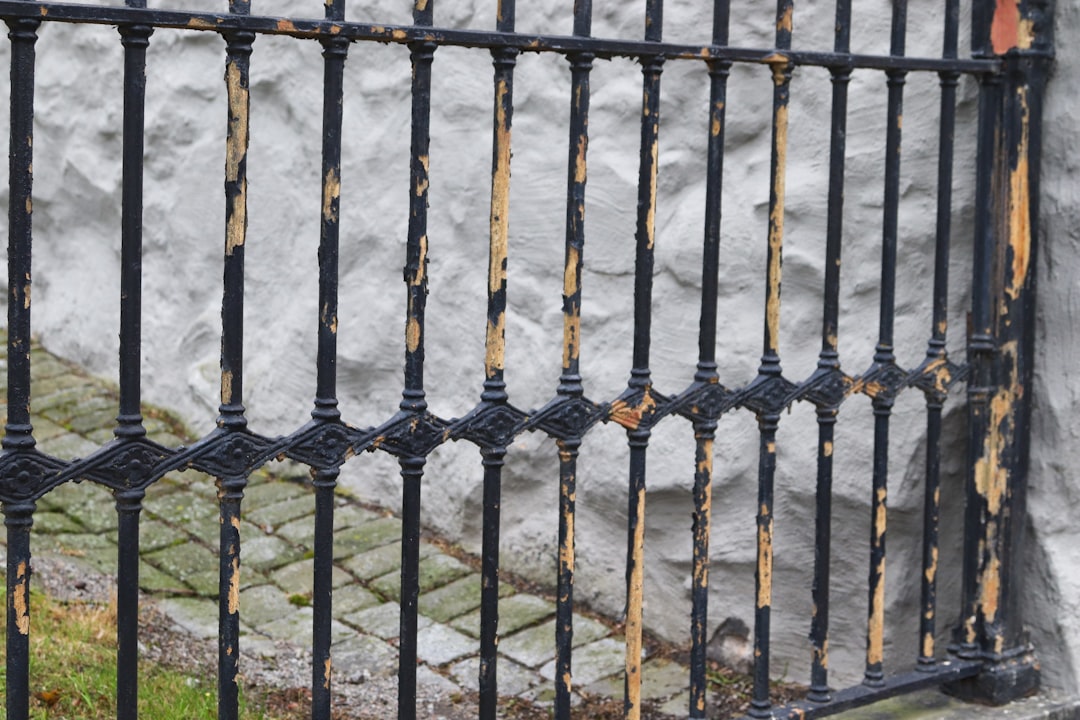
Metal driveway gate at a Mount Pleasant home

Choosing a Driveway Gate for a Mount Pleasant Home

Adding a gate to a Mount Pleasant driveway is part curb appeal and part practical security, and the right choice depends on your lot as much as your taste. We install gates every week from Snee Farm to Park West, and the same handful of questions come up on almost every measure. Here is how we think through them.

Swing or Slide

The first decision is how the gate opens. A swing gate pivots on hinges and needs clear space for the arc, which suits most wider yards off Mathis Ferry Road. A cantilever slide gate rolls sideways on a track and is the better call for a short driveway, a slope, or a low lot near the marsh where a swing would drag. If you are weighing both, our driveway gate installation page walks through the trade-offs in more detail.

Iron, Steel, or Aluminum

Metal choice is really a question of look versus salt air. Ornamental wrought iron gives you forged scrolls and finials and real weight, and it holds up well once it is primed and powder coated. Aluminum is lighter and rust-free, which matters on a lot closer to Sullivan’s Island. Galvanized steel splits the difference for a plain, sturdy gate. Whatever you pick, the finish is what buys you years, so we never hang bare metal near the coast.

Plan for Automation Early

Even if you are not motorizing the gate today, it pays to build for it. Setting posts sized to carry an operator and running a conduit during the install saves tearing anything up later. When you are ready, adding a keypad, remotes, and photo-eyes to a gate whose posts are already right is a clean upgrade rather than a rebuild.

Check the HOA and Setback First

Many Mount Pleasant subdivisions like Park West and Dunes West have gate and setback rules, and a gate too close to the road can run into a right-of-way clearance. We help confirm the requirements before we fabricate, so the finished gate sits behind the setback and passes without a redo.

Get a Real On-Site Measure

The best move for any driveway gate is an on-site measure. It turns guesswork into a plan, catches a slope or a soft post spot early, and lets us put a firm price in writing. Have a question first? You can always contact us and we will talk it through.

Thinking about a new gate for your Mount Pleasant home? Call Goldiesla at (854) 997-2035 for a free on-site estimate.

Goldiesla provides metal gate installation in Mount Pleasant, SC, covering driveway and entry gates, automatic and motorized gate systems, wrought iron and ornamental fabrication, security and access-control gates, pedestrian and garden gates, and gate repair and restoration. We cut and weld every frame in steel or aluminum, hang it on ball-bearing hinges, and set the posts in concrete footings so the gate swings true. Most of our week is spent along Rifle Range Road and the streets off Johnnie Dodds Boulevard, from Snee Farm out to Park West.

This is a neighborhood business first. We know which subdivisions have HOA gate rules, which lots off Long Point Road sit low and hold water at the post, and how the salt air near the water eats an unfinished hinge. When a homeowner in Park West or Belle Hall calls, we already know the streets, the setbacks, and the look the neighbors run, so the quote is grounded in the real site instead of a guess over the phone.

The work itself is straightforward and we keep it that way. We come out and measure the opening, talk through swing gates versus a cantilever slide, pick a finish that holds up in a 29466 coastal yard, and hand you a written price before anything is fabricated. Then we build the gate, set the posts, wire any operator to UL 325 safety standards, and test the swing before we leave. A clean install that clears the driveway and latches on the first try is the whole point.

Goldiesla is a name your neighbors on Mathis Ferry Road already see on the truck. We are licensed and insured, we powder coat or prime every steel gate against rust, and we stand behind the welds. Whether you want a simple 4 foot garden gate off a courtyard in Old Village or a double swing driveway gate with a keypad on Whipple Road, the same local crew handles it from the first measure to the final latch adjustment.

  • We know the neighborhoodsFrom Snee Farm to Dunes West, we already know the streets, HOA gate rules, and coastal conditions before we arrive.
  • Built and welded on siteFrames cut, MIG welded, and posts set in concrete footings so the gate hangs square and swings clean.
  • Rust-ready finishesEvery steel gate gets a zinc-rich primer and powder coat or enamel topcoat to fight the salt air near the water.
  • Licensed and insuredA licensed, insured local crew, and a real person answers when you call (854) 997-2035.

Gates We Build for Local Homes

One local crew for driveway gates, ornamental iron, automation, and repairs across Mount Pleasant.

Driveway and Entry Gates

Single swing, double swing, and cantilever slide gates sized to your opening and set on structural steel posts for a driveway that clears clean.

Automatic and Motorized Systems

Slide and swing gate operators with keypads, remotes, photo-eyes, and loop detectors, wired to UL 325 and ASTM F2200 safety standards.

Wrought Iron and Ornamental Gates

Custom-forged pickets, scrolls, and finials welded to match your fence, then powder coated so the iron holds its finish in coastal air.

Security and Access-Control Gates

Perimeter and pedestrian security gates with keypads, card readers, and video intercom entry for private drives and gated streets.

Pedestrian and Garden Gates

Smaller walk-through gates in steel, aluminum, or iron for side yards and courtyards, hung on self-closing hinges with a solid latch.

Gate Repair and Restoration

We fix sagging gates, replace hinges and latches, re-weld cracked frames, troubleshoot operators, and refinish corroded ironwork.

The Towns and Islands We Cover

We install and repair metal gates across Mount Pleasant and the surrounding Charleston County towns, from the neighborhoods off Coleman Boulevard to the barrier islands and up the coast toward Awendaw.

We do a lot of gate work in Park West and Snee Farm, plus Belle Hall, Dunes West, and Old Village. Not sure we reach your street? Call (854) 997-2035.

  • Mount Pleasant, SC (29464, 29466)
  • Awendaw, SC
  • Isle of Palms, SC
  • Sullivan's Island, SC
  • Daniel Island, SC
  • Charleston, SC

Typical Pricing in Our Coverage Area

Gate pricing depends on the metal, the span of the opening, and whether you add automation. A small steel walk gate is the budget end, a custom wrought iron driveway gate sits in the middle, and a full motorized system with an operator and safety sensors runs highest. The ranges below are typical for the Mount Pleasant area, and we put the firm number in writing after a free on-site measure.

Pedestrian or garden gate$300 to $1,200 installedWrought iron driveway gate$1,500 to $6,000 per jobAutomated gate system$4,000 to $12,000 per job
  • Steel or aluminum walk-through
  • Self-closing hinge and latch
Get estimate
  • Custom single or double swing
  • Powder coated against rust
Get estimate
  • Operator, keypad, and remotes
  • Photo-eyes and loop detector
Get estimate

Local Homeowner Questions

How much does a metal driveway gate cost in Mount Pleasant?
It depends on the metal, the width of the opening, and whether you add an operator. A basic steel walk gate is the budget end, a custom wrought iron driveway gate is mid-range, and a full motorized system runs higher. We give a firm written price after a free on-site measure.
What is the difference between a swing gate and a sliding gate?
A swing gate pivots open on hinges and needs clear space for the arc, which suits most yards off Rifle Range Road. A cantilever slide gate rolls sideways on a track and is the better call for a short driveway or a slope where a swing would drag.
Can you automate my existing manual gate?
Often, yes. If the frame is square and the posts are solid, we can add a slide or swing operator, keypad, remotes, and photo-eyes wired to UL 325 safety standards. We check the gate first and tell you honestly whether it can carry an operator.
How do you keep a gate from rusting near the water?
Salt air near Sullivan's Island and Isle of Palms is hard on bare steel. We use galvanized or aluminum stock where it makes sense, prime with a zinc-rich primer, and finish with powder coat or enamel. Ball-bearing hinges get sealed so they do not seize.
Do I need a permit or HOA approval for a gate?
Many Mount Pleasant subdivisions like Park West and Dunes West have HOA gate and setback rules, and some driveway gates need a right-of-way clearance. We help you confirm the requirements and set the gate behind the setback so it passes.
How deep should the gate posts be set?
Structural posts go in a concrete footing sized to the gate weight, typically below the frost line and deeper for a heavy double swing. Proper footings are why a gate still latches years later instead of sagging out of square.
Do you serve my area?
We cover Mount Pleasant ZIP codes 29464 and 29466, plus Awendaw, Isle of Palms, Sullivan's Island, Daniel Island, and into Charleston. Call (854) 997-2035 and we will tell you if we reach your street.

Find Out If We Serve Your Street

Ready for a new gate or a repair? We will measure your opening, walk you through swing versus slide, iron versus aluminum, and automation options, then give you a clear written estimate with no pressure. From Old Village to Carolina Park, one local crew handles the build, the posts, and the final latch adjustment.

Call (854) 997-2035

Back to top